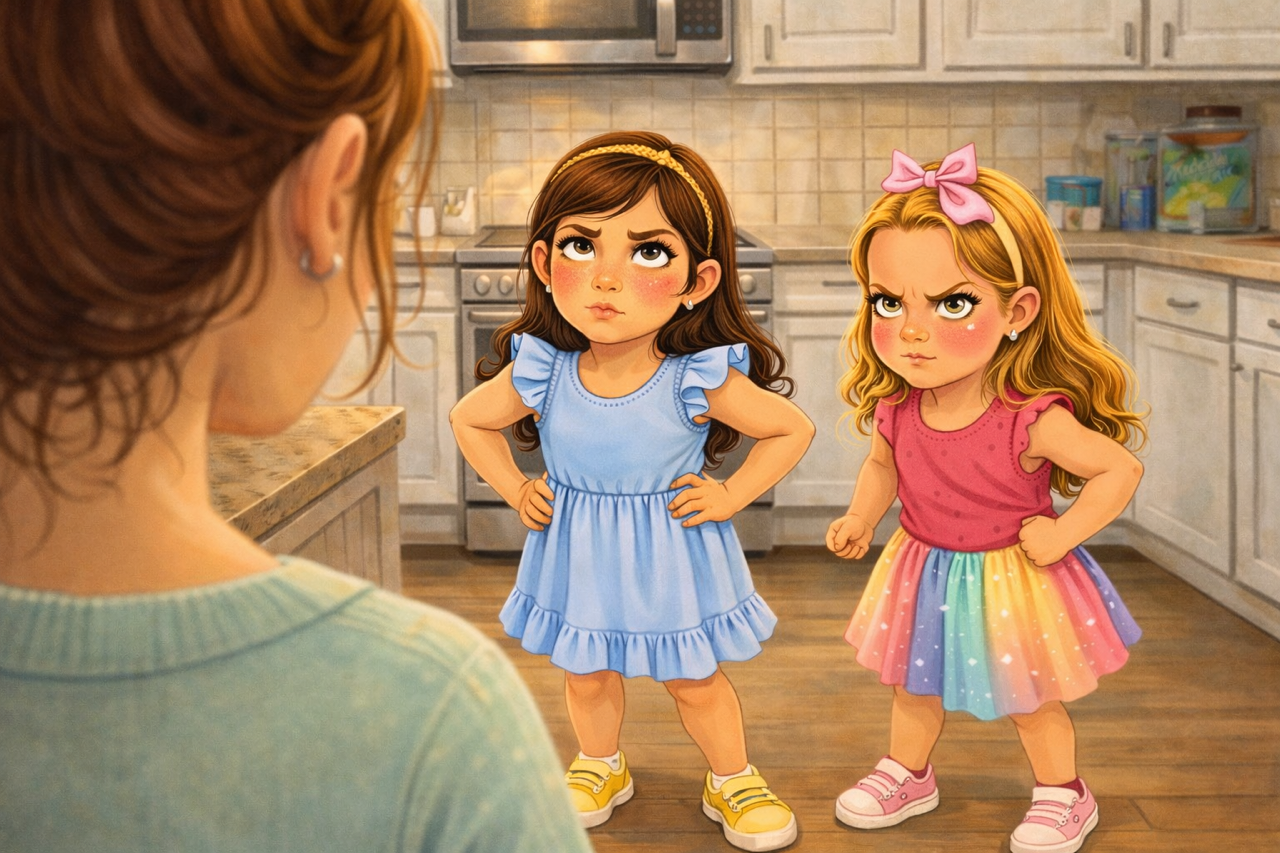
When the Sass Starts Early (And Your Kids Are Only 5 & 7)
If I had a dollar for every time I say:
“It’s not what you said, it’s how you said it.”
“You better raise those eyebrows.”
“If you can’t say something nice, don’t say anything at all.”
…y’all, I could pretend to be Scrooge McDuck diving into a vault full of money.
And let me tell you something. My girls are 7 and 5 years old.
But if I played you footage of the eye rolls, the tones, the back talk, the foot stomps, and the dramatic “you’re so mean!” speeches… you would swear these children were deep into their teenage years.
Some days I feel like I’m living with tiny reality show contestants.
Meanwhile I’m standing in the kitchen thinking:
“Lord, if this is the warm-up round… what in the world are the teenage years gonna look like?” Every day I quietly pray that by the time they are teenagers, they’ll have worked most of this drama out of their systems.
But after talking with other moms, I realized something. Apparently this sass phase starts around 3 or 4 years old now.
So aside from joking about saving for boarding school, I started making a few tiny changes to our daily routines and how I respond in the moment.
And I’ll tell you what — some of them actually work.
Not every time. Because… kids.
But enough that I’m holding onto them. So if you’re currently raising tiny humans with big opinions and dramatic delivery, here are a few things that have helped in our house.
5 Ways to Handle Sass Without Losing Your Mind
1. Correct the Tone — Not Just the Words
Half the time my kids technically say the right words. But the tone is doing all the damage.
Example:
“Fine.”
“But I DID.”
“I KNOW.”
So instead of correcting the whole sentence, I say:
“Try that again with a kind voice.” Nine times out of ten they can repeat the same words completely differently.
Kids often need help learning that tone carries meaning.
2. Don’t Take the Bait
Some sass is simply a reaction looking for a bigger reaction. If my daughter says: “You’re so mean!”
I’ve learned that arguing back only escalates things. Instead I calmly say: “You’re allowed to be upset. But we still speak respectfully.”
And then I move on. No debate. No lecture. Just calm boundaries.
3. Practice Respect When No One Is Upset
One thing that surprised me was realizing kids learn tone best when they’re calm, not during a meltdown.
Sometimes we practice this randomly: “Hey — how do we ask nicely for help?”
Or
“Show me the difference between a whiny voice and a kind voice.” They’ll usually giggle and exaggerate both. But they remember it later.
4. Give Them a Way to Reset
Sometimes kids just get overwhelmed and their emotions come out sideways.
When I notice things escalating, I say: “Let’s try that again.”
Not as punishment. Just a do-over moment.
Kids actually love second chances. Honestly… don’t we all?
5. Model the Tone You Want
This one is the humbling one. Because sometimes I hear their tone and realize…
Oh. That sounds suspiciously like me when I’m tired.
Kids mirror what they hear. So when I catch myself snapping, I try to say: “Let me try that again in a nicer voice.” If they see us correct ourselves, they learn it’s normal to reset and try again.
The Truth About Sass
Here’s the thing.
A little sass isn’t always a bad sign. Sometimes it means our kids are learning independence, testing boundaries, and figuring out how to express themselves.
Our job isn’t to eliminate personality. It’s to teach them how to use it with kindness and respect.
Now if you’ll excuse me, I need to go remind someone for the 37th time today that:
“It’s not what you said… it’s how you said it.”
And also apparently that eye rolling counts as an attitude.
Lord help us all!
#PlanItMom #PlanItMomUS #MomLife #MomHumor #RealMomLife #ParentingWithGrace #RaisingGirls #MomOfGirls #SouthernMomLife #AtlantaMom #GeorgiaMom #MomTruth #ParentingStruggles #MomBloggers