What finally getting a diagnosis taught me about being heard.
I never imagined writing a public thank-you that included artificial intelligence and kidney stones. Yet here we are.
I’ve never been one to put my life on display. Even some of my closest friends and family have had no idea about the health issues I’ve been facing. I tend to keep going, handle what needs handling, and give the familiar “I’m fine” when someone asks.
But as I approach 50, I’m realizing that everyone is battling something. Sharing a story might help someone feel less alone. It might relieve a little of the pressure to look like we have everything together when we’re barely holding on until bedtime.
So, here’s a little of my story.
I’m a woman in my 40s with two girls under eight. I’m tired. I’m cranky. And for three years, I’ve been carrying a list of symptoms from one doctor’s appointment to another.
There have been medications. Suggestions for self-care. And reminders that I am, after all, a woman in her 40s with two young children - As if I had somehow forgotten the two small people asking me for snacks while I’m already making snacks.
I understood that motherhood could be exhausting. What I couldn’t seem to explain was how far beyond ordinary exhaustion this felt.
For three years, I kept saying that the medications prescribed for ADHD, anxiety, and depression weren’t helping the way I needed them to.
Three years of losing a handful of hair every time I washed it, despite being told my hair and scalp were healthy.
Three years of being tired regardless of how much I slept. Of dragging myself through the day until around 7 p.m., when my brain suddenly decided we should remain open for business until 4 a.m.
Three years of feeling either close to tears or extremely angry, with very little room in between.
The brain fog has been relentless. My memory feels unreliable. I have been constantly swollen, sometimes enough that I need different shoes or have to take off my wedding rings.
And then there is the fat pad at the base of my neck, often called a “buffalo hump.” It has taken up residence without permission and has made me painfully self-conscious.
I kept bringing these things up. I kept leaving appointments without an explanation that made sense to me.
Meanwhile, I was starting to feel like someone I didn’t recognize.
And, honestly, I was starting not to like her very much.
She was miserable. She wasn’t much fun. She was always tired, always struggling, and increasingly worried that this was simply who she had become.
Then I heard my girls talking about how moms are always tired, need naps, and don’t feel good.
That hurt.
I knew they weren’t trying to hurt me. They were describing what they saw. But I wanted more for them, and I wanted more for myself. Somewhere along the way, the stress of feeling awful had been joined by the stress of feeling guilty about feeling awful.
Motherhood does love to offer a rewards program nobody signed up for.
Back in 2024, a CT scan for kidney stones found something else: a roughly three-centimeter nodule on my right adrenal gland. I read it in the report and brought it up with my primary care doctor.
The message I took away was that these nodules are commonly incidental findings and that concern generally increases around four centimeters. Mine was smaller, so I understood it to be something that was just “there.”
Here’s a distinction I wish I had understood sooner: an adrenal nodule’s size and whether it produces excess hormones are separate questions. A smaller nodule can still be hormonally active, and guidelines recommend evaluation for hormone excess.
At later appointments, I added weight gain to my symptoms’ greatest hits.
Over the past year and a half, my blood pressure medication was increased, and I went home to keep logs. With diabetes on my dad’s side of the family, I also raised concerns about my high-normal A1C. I left understanding that it wasn’t a concern unless I reached the prediabetes range.
But I still felt terrible. And whatever energy I had left was being spent wondering what was happening to me.
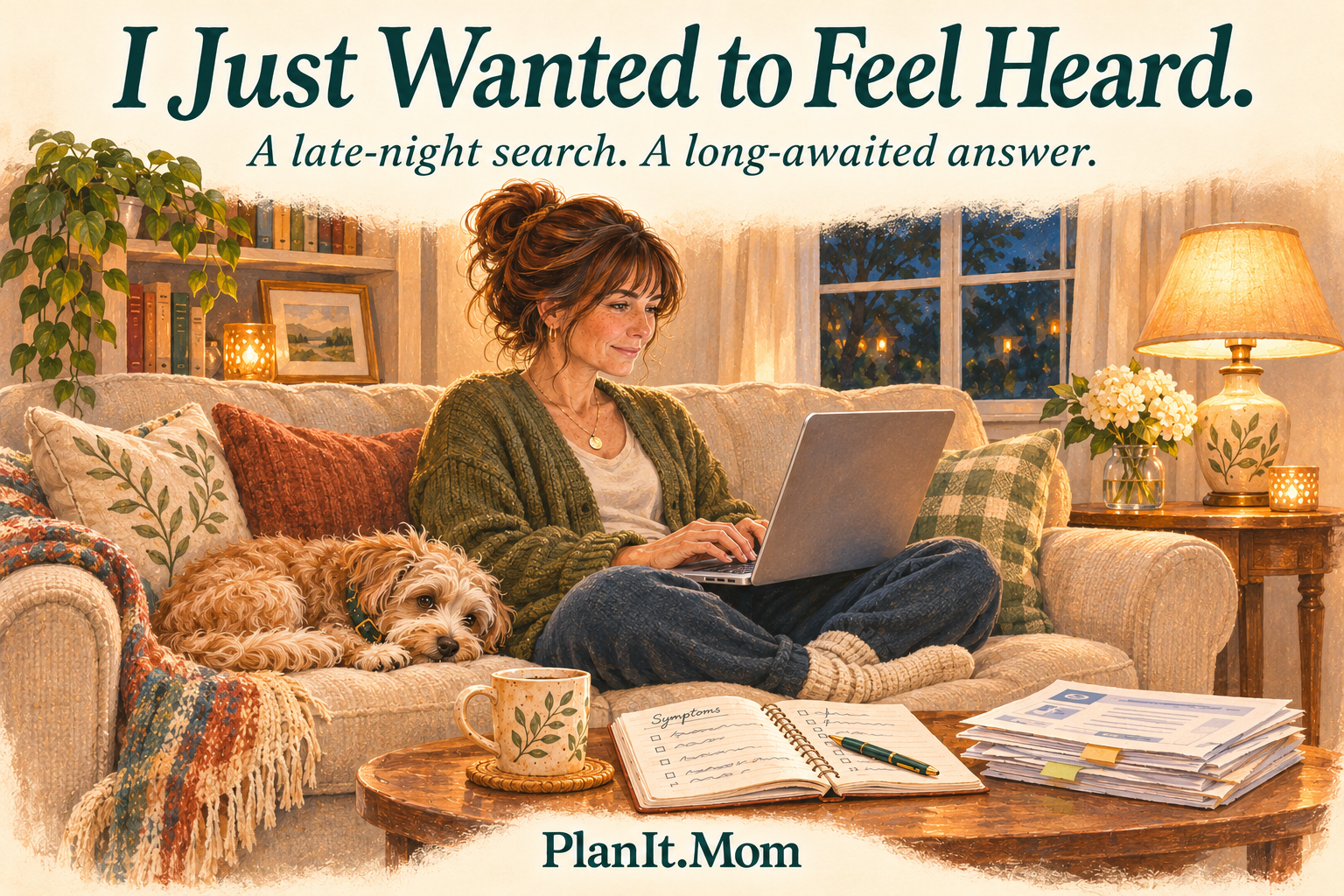
One night, I opened ChatGPT, entered my long list of symptoms, and asked a question:
Could these things be connected?
The answer that came back helped me step back and look at the whole picture. It also gave me questions to ask my doctors and asked additional questions about symptoms I hadn’t even thought might be connected and had not brought up at my doctor appointments.
[Now, let me say this plainly: asking AI about symptoms can send you down a rabbit hole with absolutely no handrail. The answers can be frightening. They can also be wrong, even when they sound remarkably confident. The World Health Organization has specifically warned about inaccurate health information from AI tools and the risks to sensitive information people enter into them.]
As someone who seems to repeatedly get notifications about health record breaches, I figured at least this time, I would voluntarily give my information away in an effort to actually benefit me this time.
A few nights later, I Googled what an adrenal nodule could do.
Gemini came back with a list of symptoms - matching the majority of the symptoms I had been experiencing for years. With those symptoms, it gave a list of questions to ask my doctors. After reading everything, I decided it was time to bring an endocrinologist into the conversation. I went to see my PCP and instead of asking her thoughts after a long emotional list of my symptoms, I had a clear list of my symptoms and follow-up questions for her. She still did not feel like I needed an endocrinologist, but I did not let up until she agreed to write the referral. I had already Googled endocrinologists that listen, have bedside manners, and are knowledgable in adrenal issues and had his information ready for her.
Finally, it was time to see the endocrinologist! Instead of just walking in with my symptoms and asking for help, I went to my first appointment carrying my symptoms, my CT report, and a specific question: Can my adrenal nodule be contributing to these symptoms?
He wasn’t immediately convinced the nodule explained everything. He discussed adjusting my thyroid medication to help with my energy. He ordered bloodwork to test my thyroid levels and as a precaution to see if the adrenal nodule was “functioning.”
Then the precautionary tests started coming back with very high cortisol results. His whole approach changed and he ordered more tests. And those results came back, triggering more tests.
In a month, I had a diagnosis: Cushing’s syndrome. Suddenly, there was a medical explanation! That little adrenal nodule I had understood to be just sitting there had been doing considerably more than taking up space.
[Cushing’s syndrome involves prolonged exposure to excess cortisol. It can affect blood pressure, blood sugar, mood, memory, and body composition, among other things. Diagnosing it requires medical evaluation and testing because its symptoms overlap with other conditions.]
Now I’m waiting for surgery.
I’m relieved to have answers. I’m angry about how long it took. I’m hopeful about treatment, and I’m still processing the years I spent wondering why I couldn’t seem to pull myself together.
There is room for all of those feelings.
And yes, this is where ChatGPT, Gemini, and kidney stones get their unusual little shout-out.
The kidney stones led to the scan. My questions about symptoms, including that late-night conversation with ChatGPT, helped me pursue another medical opinion and armed me with questions for my doctors that I had not thought of in the three years I had been trying to get answers. Tools like ChatGPT and Gemini can give us a place to begin organizing questions.
My endocrinologist and the medical testing gave me the diagnosis.
That distinction matters.
I can see why a woman who feels unheard would open her laptop after another disappointing appointment. There is something deeply appealing about having room to finish your thought. To list every symptom. To ask another question without feeling that you have already used up your time.
It also makes me sad that a woman can leave an appointment feeling more comfortable asking a chatbot whether her suffering makes sense.
Being a busy mother was relevant to my life. It didn’t explain everything happening in my body. Neither should “you’re in your 40s” end the conversation.
Anxiety, depression, perimenopause, and the exhaustion of raising children deserve thoughtful care. So does a persistent change in how someone feels and functions. We deserve help understanding what is happening when treatment isn’t helping.
If you recognize yourself in any of this, please hear me: my diagnosis does not mean you have the same condition. It does mean you deserve to have your concerns taken seriously.
Write down your symptoms and when they began. Explain what has changed and how it affects your daily life. Bring your reports. Ask what the next step will be if the current treatment doesn’t help.
[If you use AI, let it help you prepare questions or organize a timeline. Check medical claims with reliable sources and your clinician, and be thoughtful about the personal information you share. Don’t change medications or delay needed care because of a chatbot’s answer.]
And if you keep leaving appointments feeling unheard, seek another opinion.
I know that takes time, money, energy, and sometimes more determination than you have available that day. It can help to ask someone you trust to come with you, take notes, or help you find another doctor.
Reach out to friends, family, and your communities for recommendations. You don’t have to do every part of this by yourself.
I’m beginning to build my own list of doctors I can personally recommend in the Atlanta area. If you’re looking, I’m happy to share my experiences. And if I don’t have a recommendation, I’m happy to put out feelers.
This is part of why I started PlanIt.Mom.
We need places where we can admit that something is hard before we have a tidy ending. Where we can share what helped, ask for support, and stop pretending we have everything handled.
I’m still in the middle of my story. But I finally have an answer and a next step. And if sharing that helps one other woman feel less alone, I’m glad I opened the door.
We’re building a community here.
Come on in. We saved you a seat.